
After the Safavids, consciously or unconsciously imitating way of the European art was opened and Iranian creative spirit missed its power due to political, social and economic disruptions and undermining the cultural background and lack of specific orientation.
Arts in the Qajar period was not the specific resume of its previous arts and display a sense of separation from the tradition of the great Islamic Iranian culture and in general, it was at a lower level than previous art and did not have the previous glory.
At the time of Fath Ali Shah, the second king of Qajar, Iran’s art was influenced by Safavid art and was also influenced by the West. At this time, there was a return to tradition. Construction of public buildings such as building bridges and aqueducts and national tombs were done in addition to architectural monuments. Fath Ali Shah was fascinated by ancient Iran and left several prominent role in Sassanian style.
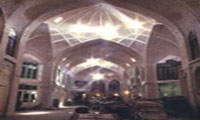
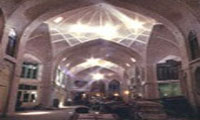
The reign of Mohammad Shah artistically was considered as the consolidation period and not evolution. At the time of Nasseraddin Shah which was a long period, major innovations were performed in religious and traditional architecture of markets, baths and caravanserais.
Generally, Qajar artists except in areas such as oil painting followed art methods of the Safavid in an imperfect form.
In the last hundred years, there is no comprehensive source of a new movement in Iranian art that could be an initiation in the art of Iran.
/J
.jpg "Beautiful Nature")
.jpg "Beautiful Nature")
.jpg "Beautiful Nature")
.jpg "Beautiful Nature")
.jpg "Beautiful Nature")
.jpg "Beautiful Nature")
.jpg "Beautiful Nature")
.jpg "Beautiful Nature")
.jpg "Beautiful Nature")
.jpg "Beautiful Nature")
.jpg "Beautiful Nature")
.jpg "Beautiful Nature")
.jpg "Beautiful Nature")
.jpg "Beautiful Nature")
.jpg "Beautiful Nature")