
Translated by, Samira Hasanzadeh
Source: rasekhoon.net
Source: rasekhoon.net
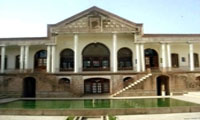
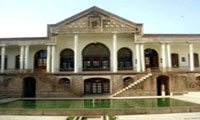
Ganjeizadeh House is among the historic landmarks of the city of Tabriz whose architecture is a combination of both the Ghajar and Pahlavi styles. Encompassing an area of 3,000 square meters, it is built in 3 storeys, with a couple of rooms in a line without interior or exterior chambers.
The use of sharp angles and rectangular windows without curves, which was common in Persian construction, is a live testimony to the beginning of modern architecture and is different from the traditional architecture of Tabriz.
Ganjeizadeh House dates from the late Ghajar era and its basements are from the Pahlavi. The historic building is currently a part of the architecture college in the University of Sahand in Tabriz.
The building contains two parts: the eastern part belongs to the Ghajar era and the western part was added to the old building in the early Pahlavi era. The eastern overlooks the south and its architecture is comparable to that of Ghadaki.
The main core of the house is the living room, known as Tanbi Room, with corridors on two sides and side rooms known as Gushvar. The projection of the Gushvar rooms functions as a columned Ivan.
The Ivan includes 5 semicircular arches. In the north part of Tanbi there is another Ivan with 3 mouths which overlooks the inside courtyard.
The north courtyard has been destroyed over time and the north side of Tanbi is walled. This part of the building is constructed in 3 storeys: ground floor, first floor, second floor. Beneath Tanbi Room stands the Howz Khaneh, literally pool house.
The west part of the building is related to the early first Pahlavi and its entrance is in the direction of east to west. Each corridor has 3 rooms, 6 altogether. This part is also built in 3 storeys.
This house boasts a columned Ivan on its east side. The materials in two parts are decorated and covered in stones, the exterior and basements with bricks. Stone, brick, plaster , limestone, and wood are used in the whole building. Unique architecture, two parts of the structure, Ivans, two-side staircases, and great brick works are the main characteristics of the monument.
Numbered 6,021, it joined the national sites in 1381, solar calendar.
.jpg "Beautiful Nature")
.jpg "Beautiful Nature")
.jpg "Beautiful Nature")
.jpg "Beautiful Nature")
.jpg "Beautiful Nature")
.jpg "Beautiful Nature")
.jpg "Beautiful Nature")
.jpg "Beautiful Nature")
.jpg "Beautiful Nature")
.jpg "Beautiful Nature")
.jpg "Beautiful Nature")
.jpg "Beautiful Nature")
.jpg "Beautiful Nature")
.jpg "Beautiful Nature")
.jpg "Beautiful Nature")