
Translator: Davood Salehan
Source: rasekhoon.net
Source: rasekhoon.net
The emergence of the financial aristocracy (4)
Islamic era of Egyptian history begins from the year 19 AH / 639 AD. This is simultaneous with Caliph Umar ibn al-Khattab’s period. In this year, 3500 members of the Arab armies led by Amr ibn Aas went to the land of Egypt. Historians have noted Amr ibn al-Aas’ action as an arbitrary one and added that Caliph was infuriated by this action, but he was forced to send an army of 10 to 12 thousand people commanded by Zubayr ibn al- Awam Ibn Khuwaylid to help him. At this time Egypt was in the Byzantine Empire following the long period of domination of the Greeks and Romans. Heraclius, the Eastern Roman Empire (610 -641 AD.), ended Iranian domination of Egypt before a brief time (619 -628 AD.) and had appointed governance to that and in Arab sources, he is called "Al-Muqawqis ". He is the one who conducted the final arrow of Alexandria’s submit in 642 AD that was the Roman military and political epicenter in the region with Amr bin Aas. Muslims established the city of Fustat as their rule center at 643.Collapse of political and cultural authority of the old Eastern Roma Empire and the rapid spread of Islam in Egypt could not be done by negligible Arab armies, and certainly in this land a process had occurred similar to Iran and Andalusia. In other words, conversion to Islam was a common and spontaneous phenomenon in Egypt. Combining this wave with Amr ibn al-Aas at the same time raised some doubts among Muslim rulers. Al-Baladhuri quoting ibn Amr ibn al-Aas, writes: “Egypt caused confusion for the people. Some Mohammad Alisses said it has opened to Anveh, and others said it has been opened to the peace".
This undoubtedly represents a large number of Egyptians voluntary conversions to Islam. The wars that took place were between Arab armies and the native and non-native forces of the Eastern Roman Empire, and in this respect, people certainly were not pro-Roman or Egyptian history would have been otherwise.
Since then, Egypt was a part of the Islamic world and it was sharer in their fate. During the Abbasid caliphate’ collapse, the land of Egypt was run by independent rulers of Tulun (904-868) and Akhshidi (934-968). They were descended from slaves of the Abbasid court. In 358 AH. / 968 C. Fatimid caliphs seized Tunisian of Egypt and founded the Cairo city. The Fatimid state was extinct by Saladin Ayyubi in 567 AH. / 1171 AD., and Ayyubids ruled over this land to the year 648 AH. / 1250 AD. Since then, the Turkish Mamluks were in charge, and the year 784 AH. / 1382 AD. Was the turn of Cherkessia’s Mamluks. Mamluk state in the year 923 AH. / 1517 C. was in hands of the Sultan Selim I, and since then this land has been placed in the territory of the Ottoman Empire.
We have previously discussed about the Mamluk state of Egypt and its importance in the era of confrontation between the Muslim world and the West Advertisement. We remind that:
The Mamluk state which ruled for 275 years in the region, was a regular and very impressive state that could establish a civilization despite multiple civil wars and political turmoil and sectarian conflicts which its effects are still visible in Egypt and Syria, especially that the royalties of this government were paying attention to science and technology. Mamluk sultans of the military aspect were able to counter with the Crusaders with such a super power and faced the Mongol invasion that threatened Egypt after the subjugation of Syria and Anatolia.
Mamluks created a political, economic and cultural elite class in Egypt in their long presence in this country. Ottoman rule did not change this situation. Since the annexation of Egypt to the territory of the Ottoman state, in continuation of the traditions of the past, issues of this land were done based on some rules that were signed by the Sultan and had the reputation of "Code". According to Ms. Helen Rivlin, "Code" was the base of Egyptian government for three centuries until the rise of Mohammad Ali. In "Code" a considerable autonomy was recognized to the local Egypt’s government. Therefore, the great Mamluk rulers still existed in Egypt as a major strength, and Turkish Pasha, who was appointed by the court of Sultan (Babaly) as the governor of Egypt, was actually under their influence. Great Mmaluk figures were called "Bai" (Beig). The number of Beigs was 24 in the early eighteenth century. Their most influential person was called "boss" and had leadership of the Mamluks in his hands. Sometimes two or three Beigs headed the Mamluks. Ottoman Kings showed their support for the Boss who had the most ability in Mohammad Aliintaining order and paying more taxes to Babaly. In fact, OttoMohammad Alin rule over Egypt was applied with the mediation of president of Mohammad Alimluks. In the second half of the eighteenth century Mohammad Alimluk’s president was titled "Sheikh al-Balad".
Thus, the Mohammad Alimluk Muslim elites continued to exist as the most influential political and social force of Egypt’s society, and with the OttoMohammad Alin’s central government’s power reduction in the late eighteenth century, their political power came to a cliMohammad Alix once again. The independence of Egypt extended to the extent that in the last decades of the eighteenth century in the OttoMohammad Alin court, the re-establishment of the Babaly rule over Egypt was examined again. At this time the "boss" of Mohammad Alimluks and "Sheikh al-Balad" of Egypt was a person named Ibrahim Keykha (village headMohammad Alin). Presidency of Ibrahim over the Egypt’s Mohammad Alimluks continued to France’s attack. the authority of the Mohammad Alimluks, who were strictly following old traditions, Europe was certainly unacceptable for the Jewish oligarchy and European colonial, because they found these forces as the most serious obstacle to their domination of the land of Egypt.
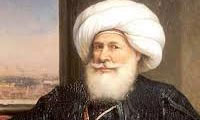
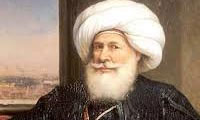
Napoleon's invasion of Egypt (1798) entered the first fatal blow to the Mohammad Alimluk elites. Mohammad Alimluks took the responsibility of fighting with foreign invasion, and in the war against the French, Mohammad Aliny men of army were killed brutally. The number of Mmluks at this time that was killed by French has been reported about 20 thousand people. In the words of the Sir Valentine Chirol, “about 20 thousand of Mohammad Alimluks, who were the best of them, were killed Mohammad Aliinly alongside the Egyptian pyramids”. Rest of Mohammad Alimluks fled to Upper Egypt, and it was for this reason that France never provided their whole domination on this part of Egypt and could not occupy the areas of the Red Sea. In this situation, an Albanians unknown and suspicious business Mohammad Alin named Muham Mohammad Alid Ali emerged that headed a subversive group, which was under support of British military, against Napoleon's army. Sir Valentine Chirol writes: MuhamMohammad Alid Ali was at the head of his group, whose members were all Albanians, and with the help of the British could gain the support of the OttoMohammad Alins. MohamMohammad Alid Ali Pasha is the founder of family of Khedive of Egypt, who continued their rule until 1952.
We have no inforMohammad Alition about ancestry of MohamMohammad Alid Ali and his background and his family. The Americana Encyclopedia says his ethnic background is unknown. We know that he was born in late 1760 AD in Mohammad Alicedonia and grew up in this land. It is said that his father was an Albanian soldier of OttoMohammad Alin army who was involved in the tobacco’s trade. MohamMohammad Alid Ali continued his father’s jobs and while serving in the Albanians army of The OttoMohammad Alin Empire, he was also known as a tobacco merchant.
MohamMohammad Alid Ali began his military activity shortly after the French invasion of Egypt from 1799 at the head of a sMohammad Alill Albanian category, and he emerged as the most influential military power of this country at the time of withdrawal of the French from Egypt (1802). MohamMohammad Alid Ali could provide his domination over the Egypt by skillful and conspiracy use of conflicts between Turkish group and Mohammad Alimluks, and at the year 1805, he was appointed as "governor" of Egypt by the Sultan.
Encyclopedia of Islam (Leiden) writes in the first years after France leaving, in addition to MohamMohammad Alid Ali, there were four real powers in Egypt: Mohammad Alimluk warriors that divided into two groups who were led by OsMohammad Alin baig Elbardisy and MohamMohammad Alid baig El Alfy, Khosro Pasha, governor of Egypt and Taher Pasha, the OttoMohammad Alin army comMohammad Alinder in the area. In April 1803, Albanian troops rebelled in Cairo and Khosro baig fled to the city. Tahir baig conducted the city and asked for the Mohammad Alimluk warriors’ help, who were stationed in Egypt, but he was murdered later. Thus, MohamMohammad Alid Ali took place as the comMohammad Alinder of the OttoMohammad Alin army in Egypt and the most powerful regional military force. He first allied with the Mohammad Alimluks, and he defeated the army that was sent by Khosrow Pasha against him and seized the governor. Allied forces of MohamMohammad Alid Ali and the Mohammad Alimluks, defeated the nest Governor who was sent from Istanbul in early 1804. At this time MohamMohammad Alid Ali and El bardisy ran Cairo. MohamMohammad Alid Ali removed El bardisy later, and Cairo was entirely in his hands with the support of Cairo’s scholars and businessmen. According to Chirol, Al-Azhar’s scholars, who at that time had a great religious power, called him as the "Pasha of Egypt" and then Selim III, OttoMohammad Alin Sultan (1789-1807), recognized this position officially and appointed him as the governor of Egypt.
This coincided with a turbulent period in the OttoMohammad Alin central government and the influence of Greek and Armenian Westernized elites in Istanbul’s court and holding economic and governmental officials by him. The third Selim, who had a culturally and politically European approach, collapsed by the rebellion in Mohammad Aliy 1807 and died later.
According to Ms. Rivlin there are not enough documents and historical resources about the history of Egypt in the early nineteenth century, the era of the rise and the authority of MohamMohammad Alid Ali, because these resources destroyed in 1820 in fires of the Cairo’s castle. Therefore, the most important sources for understanding the developments in Egypt in mentioned years, is the four volumes book of Abd al-RahMohammad Alin al-jabarti Alasar titled
Ajayeb al-Asar fi-ltarajem va al-Akhbar. Jabarti, who lived in the era of MuhamMohammad Alid Ali, likes him a lot and considers the rule of MohamMohammad Alid Ali as a divine gift that covered Egypt and restored the land. Besides the unknown details of events that led to the rise and authority of MohamMohammad Alid Ali, it is clear that this Albanian businessMohammad Alin could not gain the approval and support of the OttoMohammad Alin court without help of wealthy and sovereign European focuses and seize power after the French leaving. As Sir Valentine Chirol also refers, of course, during prowling period of Napoleon's army, like other similar groups on the Mohammad Alirgins of the Mediterranean, he also enjoyed the Britain’s financial and political and inforMohammad Alition support. notion to three phenomena reinforced this:
1. The political base and support troops of MohamMohammad Alid Ali;
2. MohamMohammad Alid Ali’s social policies in Mohammad Aliking process of decentralization of Egyptian society and transform of this country into Europe Mohammad Alirkets;
3. MohamMohammad Alid Ali’s dubious and adventurous policies in the Arabic Middle East and North Africa as the most important factor of the reduplication of OttoMohammad Alin empire and the intervention of European powers, especially Britain, in the region.
MohamMohammad Alid Ali’s political base was based on four sMohammad Alill non-Muslims or immigrants groups rather than the elders and sheikhs and Egyptian Muslims: Armenians, Coptic, Greeks and Jewish merchants.
One of the most important groups that played an important role in the promotion and authority of Mohammad Ali was Armenians who were around him. We do not have knowledge about the history of this Armenian group. We know that these were family members and associates of the Armenian brokerage that were very active around the British East India Company in India since the seventeenth century. In the eighteenth century AD, Armenian speculators were known as the most important mediators of East India Company to the amount that Aliverdi Khan, the ruler of Bengal, wanted to rush off their prowl in the zone at the end of his life.
According to Jabaroti, all Armenians around Mohammad Ali, who were as his assistants and advisors, were young men who had been educated in France and England and their chairman was Yusuf Beqos Baig. Beqos Baig was one of the few secret and confidant advisers of Mohammad Ali, and he was Minister of Foreign Affairs and Foreign Trade and translator for him.
Coptic people are an ethnic minority living in Egypt. Arabic word "Coptic" is from the Greek word "Igpetios" which means Egyptian. They are the remains of the Egyptian elites who were absorbed into the Hellenic-Roman culture during the long domination of Greece and Rome, and they converted to the above regulations after the domination of Christianity in the Roman Empire. Coptic people speak in their own special language and they write in Greece. This language was the official language of Egyptian Christians since the third century BC for five centuries. After conversion of Egyptian people to Islam, gradually Coptic was replaced by Arabic and this language was allocated to a small minority.
Coptic people were a minority among the population of 6.5 million people of Egypt at the time of Mohammad Ali’s rise. In 1830, twenty-five years after the ascension of Mohammad Ali Pasha, their number increased up to 150 thousand people. In the early twentieth century about half a million Copts were among the Egypt's population of 13 million. Their population has been reported 2.6 million people in the 1960s.
Copts during the Byzantine Empire were the dominant patrician group in Egypt and were known as the "mamlekat" (dependence on King). According to Al-Baladhuri, during Amr bin Aas’ military expedition to Egypt, the Mohammad Aliin battle of Arab troops was with the Romans and Copts, but after the surrender of Alexandria, original Roman and Coptic site, Arabs were not hard on the Copts, and they just had to pay ransom during the reign of Muawiyah. At this time, some Revayats (narrations) attributed to the Prophet of Islam (PBUH and his progeny) were spread about good treatment with the Copts. However, earlier, at the time of the conquest of Egypt, the second caliph, Umair ibn al-Khattab had ordered Amr Ibn Aas:” to open up that city [Egypt] so that Mohammad Aliny generations of them go to war [ghazā in Islam] in Islam’s favor".
Delving into these reports makes it clear that at that time the term "Coptic" certainly meant to be referred to Egyptian Roman-Hellenic elites. In other words, during Omar’s era, the masses of Egyptians converted to Islam, but Coptic nobilities paid tribute as Christians until Muawiyah’s time. There was confusion about the conquest of Egypt, whether was it opened in peace or in war which returns to this dualism performance of Egyptians and Coptic nobilities. Thus, at a time when the people of Egypt extensively converted to Islam, to the extent that their language turned to Arabic, Coptic preserved their aristocratic Roman-Hellenic culture and traditions. Their loyalty to Christianity, which was now considered as a European religion rather than eastern, is because of the mentioned point as well. This phenomenon also shows that in the seventh century AD Coptic oligarchy had no base among the Mohammad Alisses of the Egyptian people and their language and culture did not have the public credibility.
In the Islamic era of Egypt, Copts’ approach, due to their cultural and religious belonging, was of course an European approach and this, as well as domination of Mamluk Muslim elites on agricultural, economy and policy of Egypt led them to get involved with financial operations and trade with the Mediterranean ports and Mohammad Aliinly turned into the group of merchants and bankers. Chirol writes Copts, like all minorities who are removed from political power, showed a strong tendency to primitive forms of finance. Active presence here means their participation in currency exchange and dealing in usury. These factors caused the Copts connection with commercial and financial centers of South and West Europe and it is natural that between them and the Jewish oligarchy in Amsterdam and London a strong relationship was created in the seventeenth and eighteenth AD centuries.
During the French domination over Egypt, Copts’ way of political and economic power was paved and after the departure of the French, they became the main base of Mohammad Ali’s rise. The reign of Mohammad Ali Pasha is known as political, economic and cultural renaissance and re- authority era of Coptic people.
According to the Valentine Chirol, Mohammad Ali used Coptic people as financial issues’ officers of Egypt. They domination was to the extent that the financial official year of Egypt state changed to the Coptic year from Hijri year. At the time of publication of Chirol’s book (1920) a large number of Coptic people participated in the Ministry of Finance of Egypt. At this time a large number of them were usurers, businessmen and exchangers who were scattered all over the Egypt. Chirol writes to the efforts of American missionaries now many Copts have been familiar with Western culture and rich and big landowners among them are a considerable number. Chirol adds that up to British domination over Egypt, the relationship between Copts and Muslims was always in tension. British after the establishment of their domination (1883) preferred them as a "Christian minority" than Muslims.
Egypt is one of those ancient centers of Jewish settlement and its history has an inextricably link with myths and ancient history of the Jewish people. Jewish presence continued in Egypt during the Hellenistic and Roman and Islamic era.
Since half of the third BC century, Alexandria was one of the most important centers of Jewish businessmen and exchangers, and it is estimated that about 40% of the population were Jews around the birth of Christ.
Jewish sources have recalled Egyptian Fatimid period as a good era and have read it as the real boom of Jewish businesses, and in contrast, have mentioned Saladin Ayubi (1138-1193), world champion of Islam in the Crusades, in a bad way and have called him as the revival of "Orthodox Islam" and “discrimination against religious minorities" in this country. However, they acknowledge that Saladin was not a “fanatics" governor did not prosecute non-Muslims, and during his era, commercial and cultural endeavors were organized very well.
These resources have recalled the reign of the Mamluks of Egypt in the ugliness and have read the rise of the Mamluks (1250) as the beginning of a "basic rotation" in the status of the Jews in Egypt that continued until the Ottoman rule (1517). According to these sources, the main goal of Mamluks’ pressure was against Coptic people- "The most powerful non-Muslim community in the land of Mamluks”- but the Jews also suffered a lot.
Jewish historians refer to Sayf al-Din al-Qalavon’s (1290) commands and Al-Ashraf Salah al-Din Khalil (1290 -1293), the Mamluk sultans of Egypt, that during which the employment of Jews and Christians were banned in the state, but there is no mention of the political situation of that time and the relationship between these groups with the Crusades invaders . According to the sources, in the fourteenth and fifteenth AD centuries, also "anti-Jewish and anti-Christian Mamluk’s policies" continued, but they confess that during all period of "anti-Semitism" Mamluks’ government did not attack the Jewish autonomous political and judicial institutions and "Naqidany" of the family of Ibn Maymun were thew head of the Jewish communities in Egypt. This approach reflects the deep hatred of the Jewish oligarchy of the Mamluks of Egypt; a hatred that continued against the elders and sheikhs of Mamluks of Egypt during the Ottoman era, and eventually with the brutal destruction of the Mamluks’ generation in 1811 C had a dark ending.
However, the Crusades and Ayyubids and Mamluks’ conflict with Europeans led Qarayiun to find Egypt as a safe place for the release of rabbis’ oligarchy and the land become a major center for their deployment. In the second half of the twelfth AD century the Qarayyiun’s power and number of them overtook the rabbis Jewish of Egypt so much so that Ibn Maymun migrate to Cairo to deal with them and played a key role in ending the influence of Qarayyiun. In words of Mashulam Veltrayi, the Jewish traveler, in 1480 C. in Cairo, 650 households, 50 households in Alexandria, 50 households in bilbeis, and in Alkhanqh 20 Jewish families used to live. At this time, 150 families were Qarayiun and 50 families were Sameri in Cairo. In the late fifteenth and early sixteenth century, Egypt was also an objective of the Iberian Peninsula’s Jews’ immigration. This increased the number of Jews in Egypt and some prominent rabbis, including Rabbi Shmuel Ben Zayed and Rabbi Jacob Berab and Rabbi Shmuel Holloway Hakim, settled in this country. There was no such long time passing after the Jewish immigrants’ presence in Egypt that Ottoman’s invasion to this land occurred and government of the Mamluks came to an end. We have discussed about decisive fall of the Mamluks’ state of Egypt in the process of expansion of European overseas. We said that the fall of the Mamluks’ state abolished the most serious obstacle of Portuguese’ sea expansionism in the East and according to the Oxford History of India, it enabled the Portuguese to establish their control over Gujarat ports in the next years.
We do not know anything about the proportion of Jews settled in the Ottoman and Egypt in this tragedy. We only know that at this time Jews at the court of Sltam Selim I, conqueror of Egypt, had a great influence, and shortly after, Jewish Abraham Castro became the country's finance minister and head of the Mint. Abraham Castro had an important role in informing Suleiman I (official Suleiman), Salim's successor, about the rebellion of Ahmed, Pasha of Egypt, and after the killing of Ahmad Pasha (1524) gained abundant honor and esteem in the Sultan’s system and found an altitude in Egypt . According to the Jewish Encyclopedia, the Jews of Egypt celebrate the day of the murder of Ahmed Pasha every year. Thus "withdrawal period" of Jews in Egypt came to an end and they achieved the position even beyond what they had during the period of the Fatimid caliphs.
Encyclopedia of Jewish calls the domination of Ottoman over Egypt as the “strong rotation in the country's history and life of Jews in there" and adds hereinafter Egyptian Jews were facing with "large commercial facilities".
At the peak of Ottoman’s authority they were fan of negligence and Jews were replaced in key positions in financial management and tax collection and government’s tariffs. Almost all the Turkish officers and rulers, who were sent to Egypt, gave the responsibility of financial management to Jewish brokers, known as the "banker” " (general treasurer). It is clear that these brokers took huge profits through this office.
.jpg "Beautiful Nature")
.jpg "Beautiful Nature")
.jpg "Beautiful Nature")
.jpg "Beautiful Nature")
.jpg "Beautiful Nature")
.jpg "Beautiful Nature")
.jpg "Beautiful Nature")
.jpg "Beautiful Nature")
.jpg "Beautiful Nature")
.jpg "Beautiful Nature")
.jpg "Beautiful Nature")
.jpg "Beautiful Nature")
.jpg "Beautiful Nature")
.jpg "Beautiful Nature")
.jpg "Beautiful Nature")